


Updated November 1, 2026. Quick answer: The foreign buyer ban in Canada is still in force and is set to end on January 1, 2027, unless Ottawa extends or replaces it. As of November 1, 2026, no decision has been announced, and the federal budget on November 5 is the most likely place for one. Either way, Ontario’s 25% Non-Resident Speculation Tax (NRST) still applies to foreign buyers everywhere in the province, including Niagara.
If you’re thinking about buying in Niagara from outside Canada, helping a relative from overseas buy, or selling to someone who isn’t a Canadian citizen, here’s where the rules stand and what we’d watch for over the next two months.
What is Canada’s foreign buyer ban?
The Prohibition on the Purchase of Residential Property by Non-Canadians Act makes it illegal for a “non-Canadian” to buy a home in Canada, directly or indirectly. It took effect on January 1, 2023, and CMHC administers it (CMHC).
A non-Canadian is anyone who isn’t a Canadian citizen, a permanent resident or registered under the Indian Act. The ban also covers companies formed outside Canada, and private Canadian companies controlled by non-Canadians.
Is the foreign buyer ban in Canada ending on January 1, 2027?
That’s the current end date. The ban was first set to run for two years, to January 1, 2025. On February 4, 2024, the federal government extended it to January 1, 2027 (Finance Canada). Here’s what has happened since:
- December 2025: Housing Minister Gregor Robertson said Ottawa would review the ban during 2026, looking at models like Australia’s, where foreign buyers can buy new construction but not existing homes (Bloomberg).
- October 7, 2026: Finance Minister François-Philippe Champagne said the government is “looking at all the options,” without committing to an extension (Canadian Mortgage Trends).
- November 5, 2026: the date of the federal budget (The Hub), the most likely place for an announcement.
So don’t assume the ban disappears on New Year’s Day. Ottawa can still extend it or change it, and we’ll update this post as soon as there’s news.
The foreign buyer ban in Canada at a glance
| Item | Detail |
|---|---|
| Law | Prohibition on the Purchase of Residential Property by Non-Canadians Act |
| In force | January 1, 2023 |
| Extended | February 4, 2024, to January 1, 2027 |
| Scheduled end | January 1, 2027, unless Ottawa extends or replaces it |
| Main changes | March 27, 2023: work permits, vacant land, development, 10% control threshold |
| Homes covered | Buildings with up to 3 units, including semis and condos |
| Where it applies | Census metropolitan areas and census agglomerations only. Homes outside them, including much of rural Ontario, are excluded. |
| Penalty | Fine up to $10,000, and a court can order the home sold |
| Ontario add-on | 25% NRST on foreign buyers, province-wide, separate from the ban |
Does the foreign buyer ban apply in Niagara?
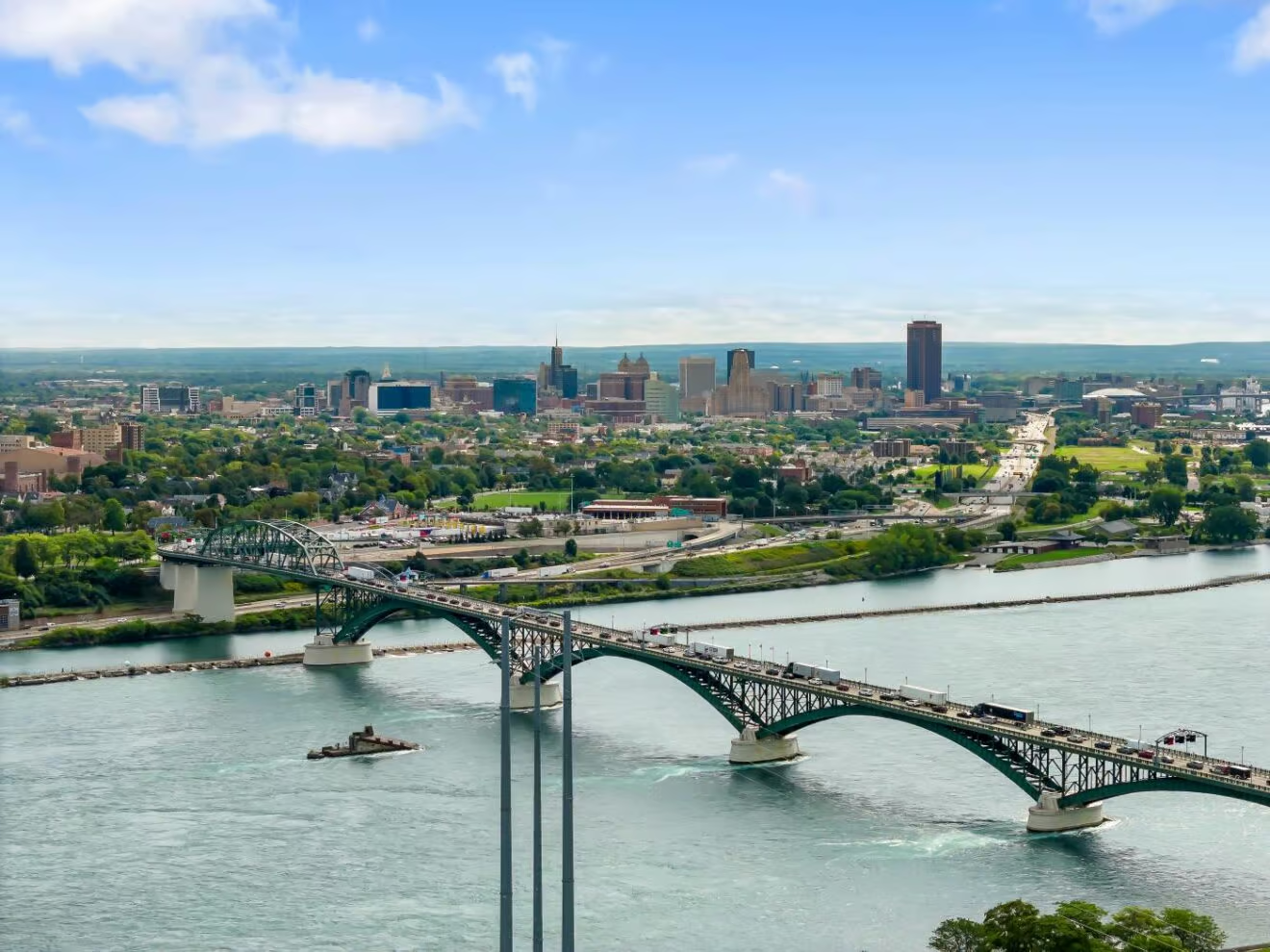
Yes, for most homes. The ban covers buildings with up to three units, including semis and condos, inside census metropolitan areas and census agglomerations (Regulations). Buildings with four or more units aren’t covered.
Most of Niagara sits inside the St. Catharines–Niagara census metropolitan area, which takes in 10 of the region’s 12 municipalities: St. Catharines, Niagara Falls, Welland, Thorold, Pelham, Port Colborne, Fort Erie (including Crystal Beach and Stevensville), Niagara-on-the-Lake, Lincoln and Wainfleet (Statistics Canada).
Grimsby is covered too, as part of the Hamilton census metropolitan area. That leaves West Lincoln, including Smithville, which isn’t part of any census metropolitan area. If a home there is also outside a census agglomeration, the ban doesn’t apply, so check the address with CMHC’s address lookup and have your real estate lawyer confirm it before you sign.
Are there parts of Ontario the ban doesn’t cover?
Yes. The ban only applies inside census metropolitan areas and census agglomerations. A home outside both is excluded (Regulations, s. 3), which leaves out a lot of rural Ontario, small towns and cottage country.
That doesn’t make those homes a loophole. Ontario’s 25% NRST still applies everywhere in the province, including rural properties and cottages, so a foreign buyer who can legally buy outside a census area still pays it.
Who is exempt from the foreign buyer ban in Canada?
These buyers can still purchase a home, among others (CMHC):
- Canadian citizens, permanent residents and people registered under the Indian Act. They were never covered, including Canadians living abroad.
- Work permit holders with at least 183 days left on their permit on the purchase date, who haven’t already bought a home under the ban.
- International students who have filed tax returns and lived in Canada at least 244 days in each of the past five years, buying a home for $500,000 or less.
- Refugees and protected persons, and refugee claimants whose claim has been referred to the Refugee Protection Division.
- Spouses and common-law partners buying together with a Canadian citizen, permanent resident or other exempt person.
- Accredited diplomats, and people given temporary status as a safe haven from conflict.
Some transfers aren’t a “purchase” at all: inheriting a home, getting one through a divorce or separation, receiving one as a gift, or renting one to live in.
What changed in March 2023?
On March 27, 2023, Ottawa loosened the rules (CMHC):
- Work permits: eligibility now depends on having 183 days or more left on the permit. The earlier tax filing and work history conditions were removed.
- Vacant land: land zoned residential or mixed use is no longer covered.
- Development: non-Canadians can buy residential property to develop it.
- Company control: the foreign control threshold for private companies rose from 3% to 10%.
What are the penalties for breaking the ban?
A non-Canadian who breaks the ban, and anyone who knowingly helps them, can be fined up to $10,000. A court can also order the home sold, and the buyer gets back no more than what they paid (Act, ss. 6 to 8). That includes realtors, lawyers and sellers who knowingly help, so expect your agent and lawyer to confirm a buyer’s status.
Not a Canadian citizen or permanent resident and thinking about buying in Niagara? Book a buyer’s meeting and we’ll walk you through your options before you start looking.
How the ban works with Ontario’s 25% NRST
They’re two separate rules, and Ontario buyers have to think about both. Ontario’s Non-Resident Speculation Tax applies when a foreign national, foreign company or taxable trustee buys a home anywhere in Ontario. It has been 25% since October 25, 2022, and it’s charged on top of regular land transfer tax (Ontario).
- Homes covered: the NRST covers properties with one to six units. The federal ban covers buildings with up to three.
- Where: the NRST applies everywhere in Ontario. The federal ban applies only in census metropolitan areas and agglomerations.
- Federal exceptions don’t carry over. Ontario says buyers who qualify for a federal exception may still owe the NRST. A work permit holder can be allowed to buy and still pay 25%.
- One foreign buyer means tax on the full price. If any buyer on title is a foreign national, the NRST applies to the whole purchase price, not just their share.
- Rebate: a buyer who becomes a permanent resident within four years of buying may qualify for an NRST rebate.
Example: on a $600,000 Niagara Falls home, the NRST is 25% × $600,000 = $150,000, on top of land transfer tax. So even if the federal ban ends, buying here stays expensive for foreign buyers.
Will foreign buyers push Niagara prices up in 2027?
We don’t expect much change for the homes most Niagara families buy. Statistics Canada figures show non-residents owned about 2.6% of Ontario properties in 2024, and economists at RBC and the University of Ottawa have said ending the foreign buyer ban in Canada is unlikely to move prices much (Global News).
Some sellers are hoping foreign demand comes back in January and pushes prices up. With a $150,000 tax on that $600,000 home, we don’t see it happening. Price for the market we have.
Selling a Niagara home while living outside Canada
The ban only covers buying. If you own a home here and live outside Canada, you can sell it at any time. Non-resident sellers do have to deal with the CRA before closing, and the buyer’s lawyer may hold back part of the sale price until that’s done (CRA). Realtors can’t give tax advice, so bring your accountant in early so the sale isn’t held up at closing.
If you lived in the home while you were a Canadian resident, our principal residence exemption guide explains which years the exemption can cover and how it works for American owners.
What should Niagara buyers and sellers do right now?
- Non-Canadian buyers: confirm your status and any exception with a real estate lawyer before you sign. The regulations treat getting an interest in a home, with or without conditions, as a purchase, so the timing of your offer matters.
- Buyers waiting for 2027: watch the November 5 budget, and budget for the 25% NRST either way.
- Canadian buyers: nothing changes for you on January 1.
- Sellers: plan for the buyers who are here now. Our Niagara market update shows where prices and sales stand this month.
Frequently asked questions about the foreign buyer ban
Yes. As of November 1, 2026, it’s still in force and is set to end on January 1, 2027, unless Ottawa extends or replaces it.
Not as of November 1, 2026. The federal government says it’s looking at all its options, and the federal budget comes out on November 5, 2026.
Yes, for most homes. Ten of Niagara’s 12 municipalities, including Niagara Falls, St. Catharines, Welland and Fort Erie, are inside the St. Catharines–Niagara census metropolitan area, and Grimsby is inside Hamilton’s. West Lincoln isn’t in a census metropolitan area, so check a home there with your lawyer.
Not if the property is outside a census metropolitan area or census agglomeration, which leaves out much of rural Ontario and cottage country. Ontario’s 25% NRST still applies everywhere.
Not while the ban is in force, unless an exception applies, such as buying with a spouse who is a Canadian citizen or permanent resident, or holding a work permit with at least 183 days left. If the ban ends, Ontario’s 25% Non-Resident Speculation Tax would still apply.
Under the federal ban, yes, if at least 183 days remain on the permit on the purchase date and they haven’t already bought a home under the ban. They’ll usually still owe Ontario’s 25% NRST unless an NRST exemption applies.
Probably not by much. Non-residents owned about 2.6% of Ontario properties in 2024, and the 25% NRST still makes buying here expensive for foreign buyers.
Talk to a Niagara team about the foreign buyer ban
Questions about buying or selling in Niagara with a non-Canadian involved? Call us at 905-357-8067 or email emily@thebarryteam.ca.
This article is general information, not legal or tax advice. Confirm your situation with a real estate lawyer and the official sources below.
Sources
- Justice Laws: Prohibition on the Purchase of Residential Property by Non-Canadians Act
- Justice Laws: Prohibition on the Purchase of Residential Property by Non-Canadians Regulations (SOR/2022-250)
- CMHC: Prohibition on the Purchase of Residential Property by Non-Canadians Act
- CMHC: Amendments to the Regulations (March 27, 2023)
- Statistics Canada: 2021 census metropolitan areas and their municipalities
- Finance Canada: Two-year extension to the ban (February 4, 2024)
- Government of Ontario: Non-Resident Speculation Tax
- CRA: Disposing of or acquiring certain Canadian property
- Canadian Mortgage Trends (October 7, 2026)
- Global News (October 13, 2026)
- The Hub (October 21, 2026)
- Bloomberg (December 22, 2025)

Planning your next home purchase or sale?
Book a consultation with our team to get the process started.